From: Harold Brattland <habrattland@arvig.net>
Sent: Monday, February 9, 2026 3:05 PM
To: Brattland, Mike * <mgbrattland@gerlecreek.com>
Subject: AviationWeek :: Congressional Spending Package Blocks Many Pentagon Proposals
Check out this site https://aviationweek.com/defense/budget-policy-operations/congressional-spending-package-blocks-many-pentagon-proposals
--
Congressional Spending Package Blocks Many Pentagon Proposals
Brian Everstine January 23, 2026
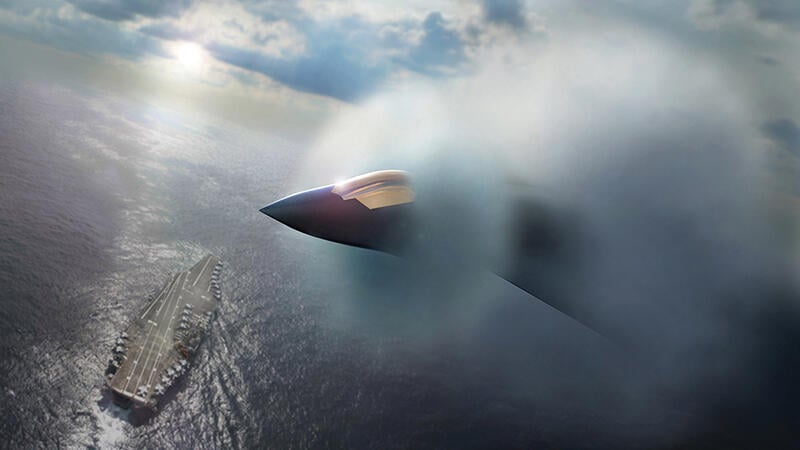
Boeing and competitor Northrop Grumman have been receiving contract extensions as they await an F/A-XX award.
Credit: Boeing
For almost a year, the Pentagon’s pause and review of the U.S. Navy’s F/A-XX program has tested the patience of the competitors as well as many in the service and lawmakers who support fielding of the next-generation fighter. That patience appears to have run out among those holding the Pentagon’s purse strings.
The Defense Department’s fiscal 2027 proposal, rolled out in July 2025, cut spending for the F/A-XX to $74 million from the $971 million projected for this year and paused the program to review both the need and the industrial base capacity to build it alongside the U.S. Air Force’s Boeing F-47. Six months later, the House and Senate Appropriations Committees proposed a fiscal 2027 defense spending bill, adding about $897 million and calling for an urgent report about when the Pentagon will award the contract to Boeing or Northrop Grumman.
- The Air Force’s E-7A is saved in appropriations bill
- Lawmakers question Golden Dome spending
In the bill’s Joint Explanatory Statement report, appropriators charge that the Pentagon has squandered 10 months and $453.8 million from the fiscal 2025 continuing resolution directed toward the F/A-XX. “Rather than proceeding with a Milestone B award, the department expended nearly all fiscal 2025 funding on contract extensions with minimal demonstrated value to the program,” the report states.
The schedule had assumed a March 2025 engineering and manufacturing development award to Boeing or Northrop Grumman. With the award pushed back again and again, the companies received repeated contracts to keep their teams together and continue design work. The Pentagon said the $74 million was intended to finalize designs, although the program for now remains stalled.
Lawmakers are calling on the Pentagon to comply with their intent for the new funding and to spend any remaining money correctly. Within 45 days of potential passage, the bill requires Defense Secretary Pete Hegseth to report back with the current strategy and an updated schedule for the F/A-XX contract award—a revised timeline to meet an accelerated initial operational capability—and to outline barriers to executing previously approved funding.
Top Pentagon officials, including Michael Duffey, undersecretary of defense for acquisition, technology and logistics, and Navy Secretary John Phelan have repeated the concern about industrial base capacity when asked about the progress of the F/A-XX.
“There’s an interest to make sure that we can, from our standpoint, [ensure] that the industrial base is able to support it,” Duffey said at the Reagan National Defense Forum in early December.
Sitting on the Reagan Forum stage with Duffey as he made the remarks was Boeing Defense and Space CEO Steve Parker. Both Boeing and Northrop Grumman have worked to burn down risk and are “poised to move fast,” Parker said. “We’re taking the time up front that once the decision is made, if it’s a go, we will move with speed. . . . Can industry do both? Absolutely, we can do both.”
The lawmakers’ appropriations proposal moves to bolster the F-47 program as well, adding $500 million in funding, for a total of $3.08 billion.
The F/A-XX is not the only program lawmakers are supporting against the Pentagon’s wishes. The proposed bill adds $900 million to the Air Force’s Boeing E-7A Wedgetail effort, for a total of $1.1 billion, and directly states that funds cannot be used to pause, cancel or terminate the effort. The Pentagon’s civilian leadership is at odds with the Air Force and lawmakers on the plan, saying the air moving target indication mission needs to shift quickly toward space (page 74).
Appropriators are also blocking several shifts the Army has proposed in its aviation programs. The bill calls for adding $240 million to buy more General Atomics MQ-1C Gray Eagles and $360 million for more remanufactured Boeing AH-64E Apaches, as well as continuing the Future Tactical UAS and the Improved Turbine Engine Program—all of which the service proposed canceling or curtailing.
The Golden Dome, President Donald Trump’s vision for a massive air and missile defense shield for the U.S., also comes under the gun in the package. The text criticizes the Pentagon for not providing details and justification for about $23 billion in mandatory funding, including omitting a deployment schedule, costs and a finalized system architecture. The lawmakers argue that this means Congress could not assess resources available for programs in fiscal 2026. In response, the bill directs Hegseth to outline specific expenditures by program in a line-by-line fashion for fiscal 2025, 2026 and 2027 within 60 days.